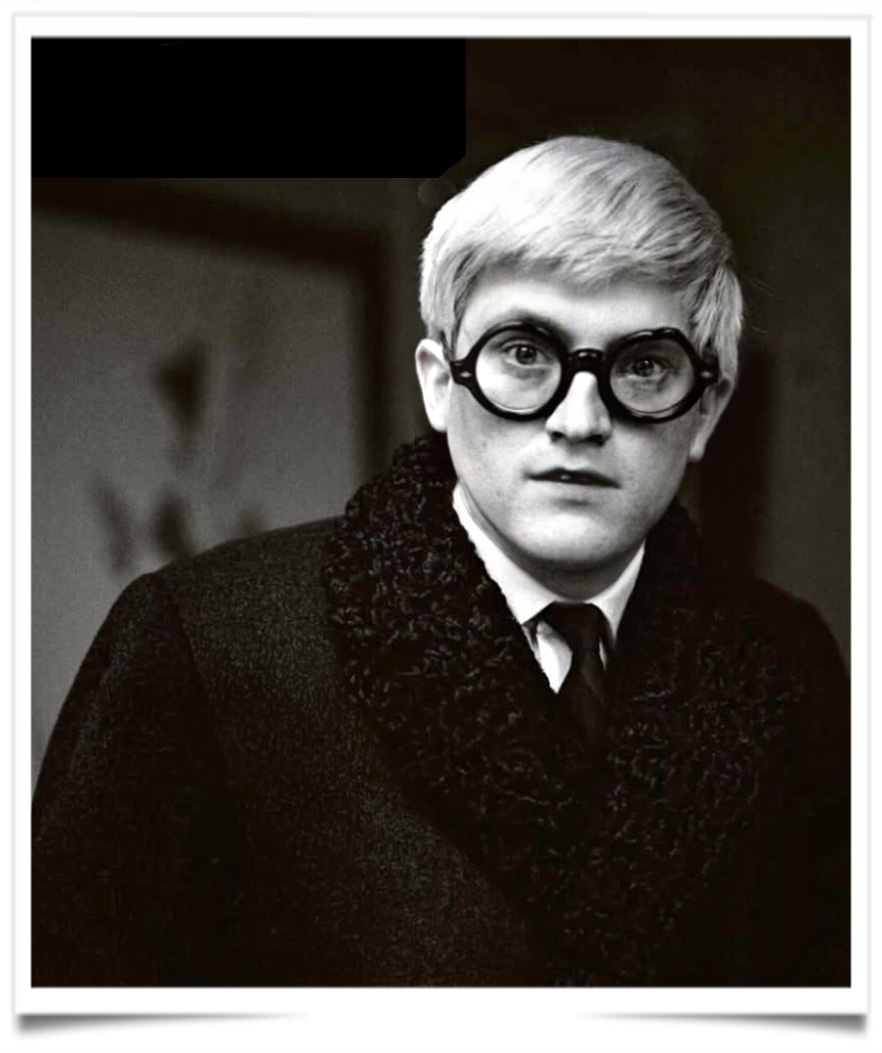
For forty years, we have been endlessly told that David Hockney is the last great living painter. A sort of chromatic prophet descending from Yorkshire with a palette of candy colors to save Western art from its melancholy. But what, after all, are we contemplating in those famous swimming pools that have become universal icons? Immaculate blue water, trouble-free sunshine, dream villas, tanned bodies. All with the metaphysical depth of a luxury real estate catalog. Like Iris Apfel, they even share the same glasses. Hockney did not so much paint California as manufacture its logo. He transformed the fantasy of bourgeois success, Kardashian-style, into cultural wallpaper for wealthy apartments.
One does not look at his paintings; one settles into them as if entering an air-conditioned waiting room. And that is precisely why The Lord adored him. Hockney decorated the world the way others choose J’Adior curtains for their living rooms. In his work, everything is clean, tidy, polished, and neatly pressed. Even the light seems to have come straight from the dry cleaner. One searches for roughness, doubt, accident, the sweat of a painter wrestling with his materials. Instead, one finds the perfection of a travel brochure, the aesthetic of a model second home prepared for prospective buyers.
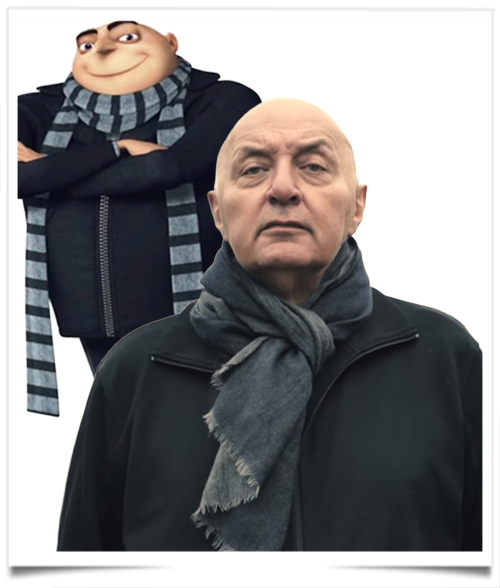
 For decades, the world’s largest corporations were led by financiers. MBA graduates from prestigious business schools sat at the top of organizational charts, armed with spreadsheets, ratios, and a command of capital that seemed to be the universal key to economic power. But something profound has shifted. Look at the figures who dominate the global economy today:
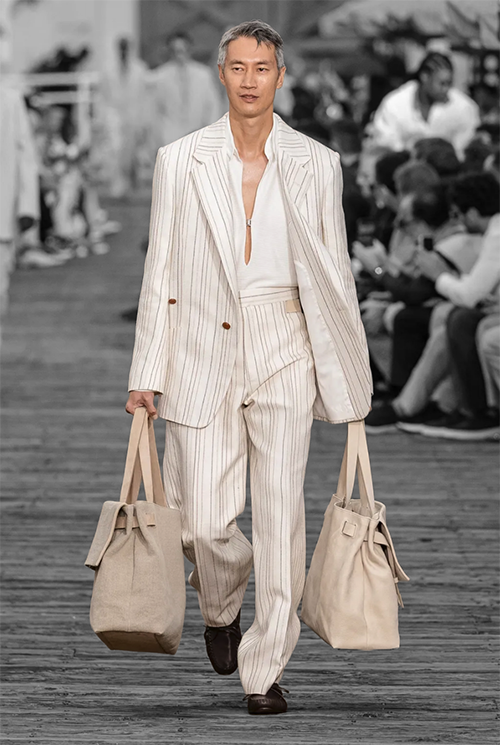 For Summer 2027, Alessandro Sartori celebrates a way of life deeply rooted in Italian culture with “La Villeggiatura,” a collection inspired by family holidays and the pleasure of carrying one’s lifestyle wherever one goes. The Zegna artistic director drew on this nostalgic tradition to create a wardrobe where comfort, freedom, and sophistication come together effortlessly. More than a simple evocation of summer vacations, the collection expresses the idea of a mobile lifestyle, where the boundaries between relaxation and elegance naturally disappear.
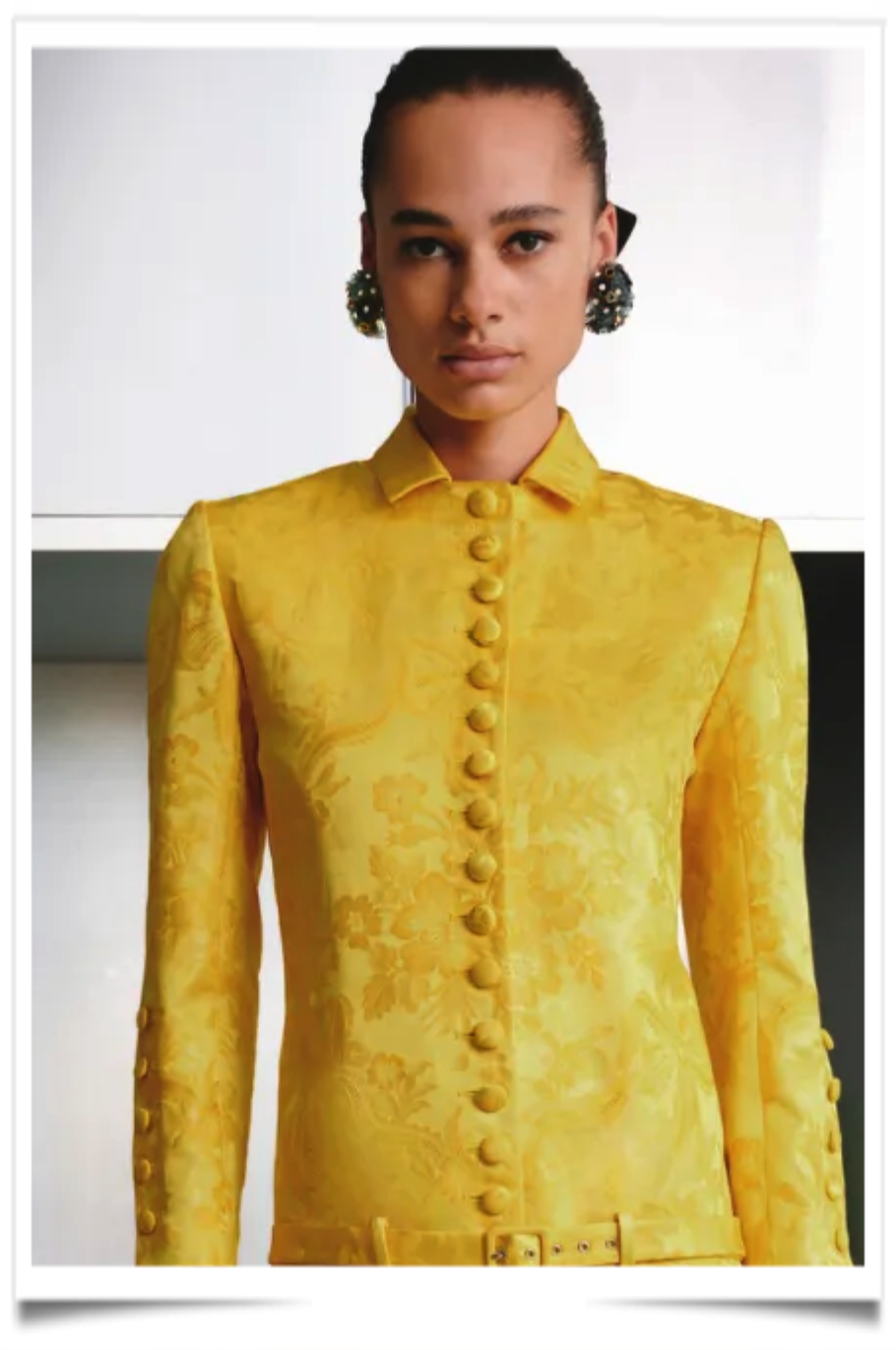 The Resort 2027 collection by Tory Burch confirms the designer’s stylistic evolution toward a more personal and daring fashion language, blending offbeat femininity, unexpected color combinations, and textile innovation. Remaining true to her desire to revisit classics by making them “a little stranger,” Burch presents an optimistic and sophisticated wardrobe designed to accompany her clients across diverse destinations and climates. From the very first looks, a 1950s retro spirit emerges through floral dresses, low-slung belts, and rubberized leather boots suited to rainy seasons.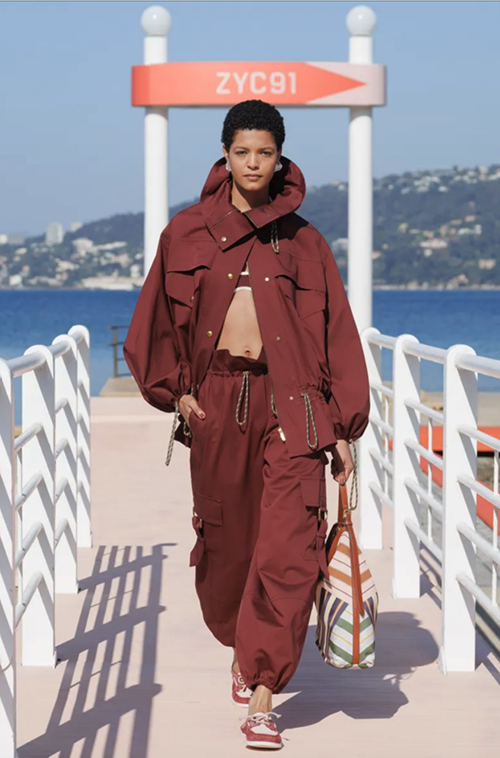
 Some sacred unions are remembered by history. Hermès and its horses. Louis Vuitton and its monogram canvas. And now, RIMOWA and… Pikachu. The Cologne-born house, acquired by LVMH in 2017, has just unveiled a capsule collection celebrating 30 years of Pokémon — available exclusively in Japan, naturally, because nothing says “exclusivity” quite like confining the embarrassment to a single market.
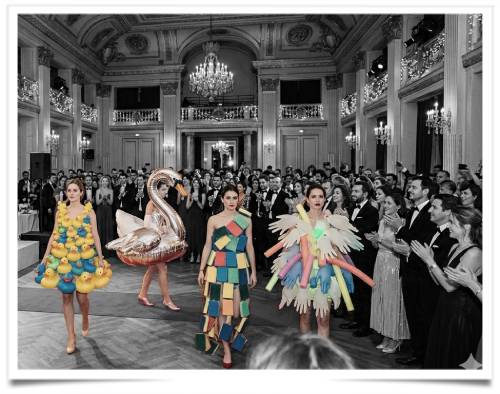 The Spring-Summer 2027 menswear calendar has arrived and, faithful to Parisian tradition, it promises a week of intense strategic activity surrounding a subject as light as a cashmere coat lined with lead: fashion. Seventy-four brands, thirty-six runway shows and thirty-eight presentations will unfold before the inspired gaze of a meticulously dressed crowd. The opening will belong to the students of the French Fashion Institute, a charming ritual in which the future is applauded with enthusiasm. A touching custom, although one detail persists with Swiss regularity: despite the school’s prestigious reputation, not a single graduate currently stands at the helm of a major French or international fashion house. A launchpad whose rockets sometimes seem to prefer theoretical orbit.
 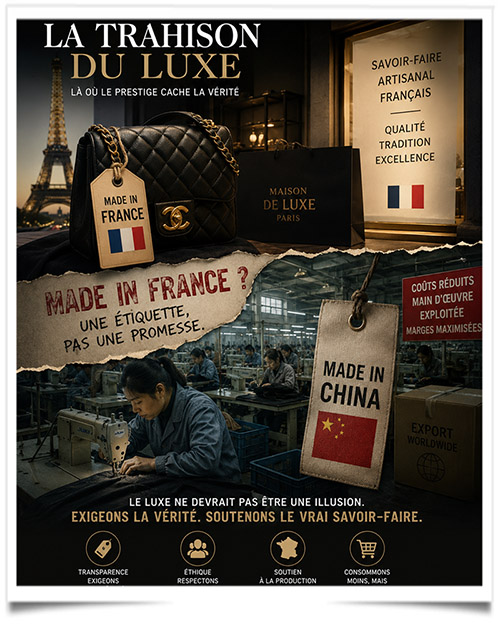 Unjustified price increases, erosion of quality, growing inequalities, and an identity crisis: the global luxury sector is undergoing its deepest reckoning since the Great Recession of 2008. At the Financial Times’ “Business of Luxury Summit” in Barcelona, major maisons were confronted with an unvarnished reality: they have lost 50 million customers in just two years.
 Today’s youth are growing up in a world where facts bend, where screens replace experience, and where Orwell’s shadow looms larger than ever.
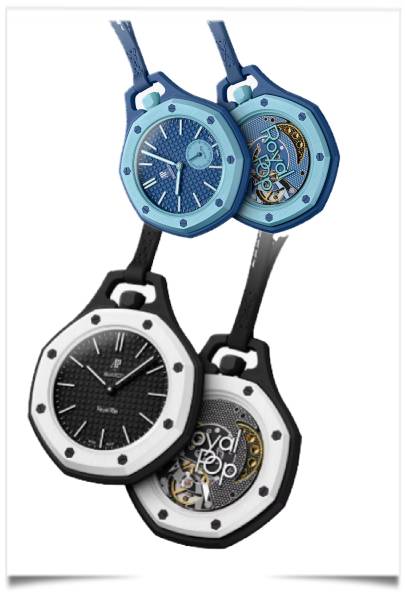 They arrived in hoodies, hands buried in their pockets, eyes glued to their phones. Not to the dial of a watch, since they do not wear one, but to their phones where the Vinted app is already open and ready to upload a product listing written the night before while they were standing in line. The photo? Snapped hastily on the sidewalk, the watch still in its box. The price? €1,200. The description? “Never worn.” Of course never worn. It did not survive ten minutes on their wrist. In fact, it was never meant to.
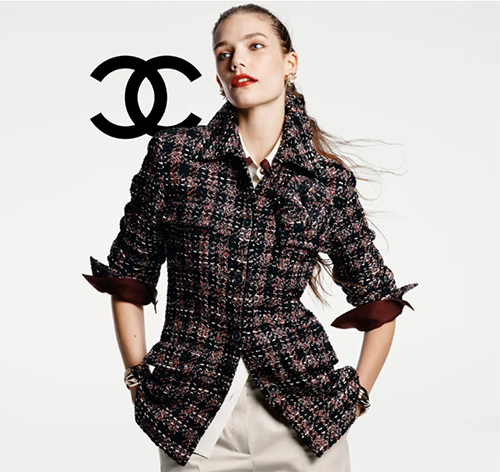 After a difficult year marked by a decline in sales, Chanel is finding its way back to growth. The prestigious French fashion house reports annual revenues of $19.3 billion, up 3% at current exchange rates, representing a 1.8% increase on a comparable basis. This recovery, as encouraging as it is symbolic, comes in a still fragile environment, particularly due to the persistent slowdown in luxury spending in mainland China, which had weighed heavily on the previous year’s results.
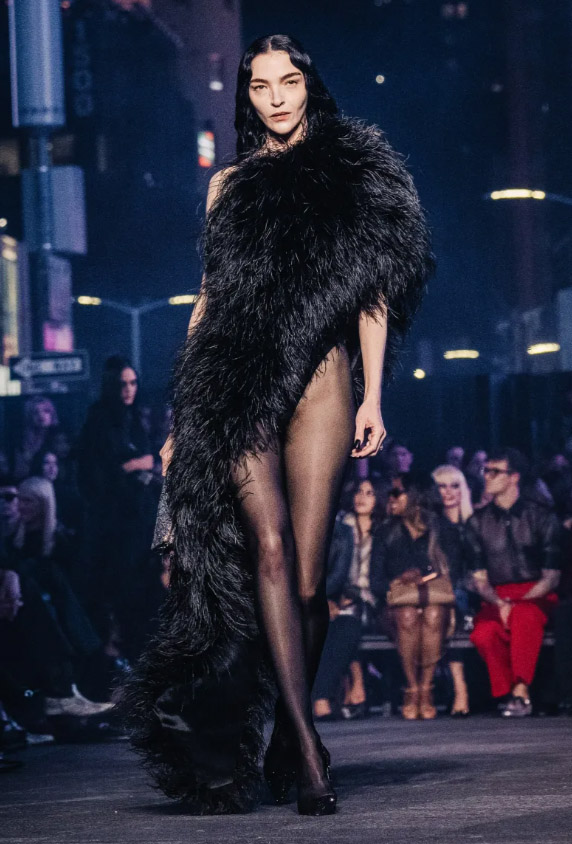


 At LVMH, houses are rarely sold. After all, Bernard Arnault tends to collect brands the way others collect Flemish paintings or vineyards of questionable “nectar quality.” So seeing Marc Jacobs move to WHP Global for €1.4 billion feels less like a simple transaction and more like a grand spring cleaning of vicuña, that elusive Andean camelid.
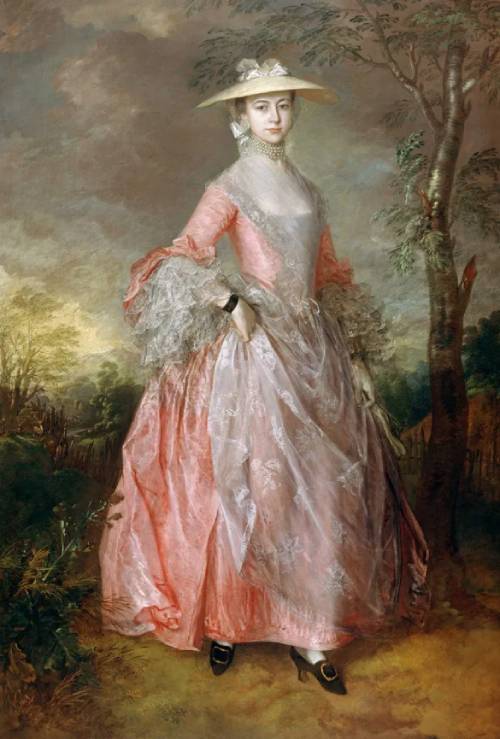 There are billionaires who collect yachts, and then there’s the Lord’s dynasty, who prefer to collect ceilings and Sienese bronzes. This week, the Lord of the Arnaults struck again. Destination: “The Frick.” Yes, the Frick Collection. The name alone sounds like an immensely wealthy American aunt who refuses gluten and has three Gainsboroughs in her living room. The Lord loves “The Frick” in French it’s chic.
 In the gardens of global beauty, India is now releasing a trail impossible to ignore. The great houses move forward like master perfumers searching for a rare new raw material: Estée Lauder has embraced the Ayurvedic elegance of Forest Essentials, while Unilever and L’Oréal continue to multiply alliances and acquisitions. Behind these strategic moves lingers the same intuition: India is no longer merely a market, but a fragrance of the future, an incandescent blend of botanical tradition, technology, and contemporary desire.
  Paul Smith continues to modernize its leadership team with the appointment of Zia Zareem-Slade as managing director. Formerly head of Annoushka, and previously associated with Fortnum & Mason, Hauser & Wirth and Selfridges, she is known for her expertise in commercial growth, digital development and customer experience.
 Over the decades,
 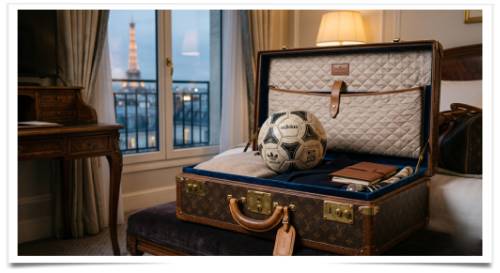 On Sunday evening, the pitch will be upholstered in Alcantara, and the red lacquered studs will gleam against the black night: Stade Rennais will face Paris FC in a derby that will look less like football and more like a showcase from Place Vendôme than a corner shop in Aubervilliers. In the stands, no one will wave scarves. Instead, spectators will display “Dior J’adore” silk carré scarves like battle standards from a very expensive kingdom.
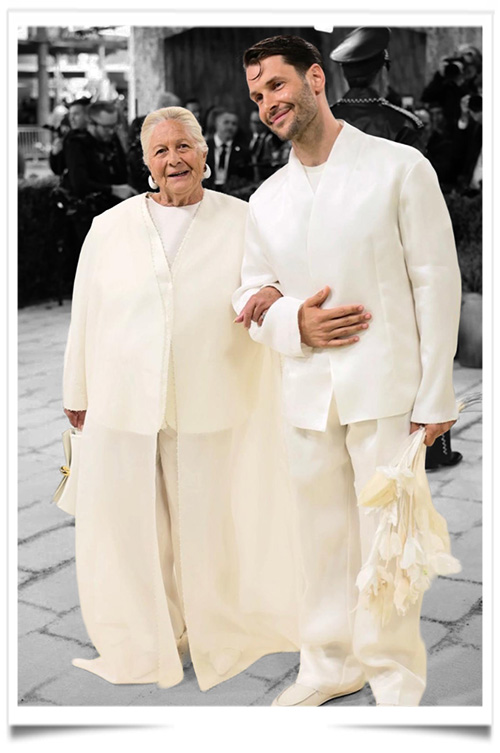 Beneath the carnivorous chandeliers of the Met, or the Mite Gala depending on one’s mood, where every gaze glints like a freshly sharpened blade,
  Doris F. Fisher, who co-founded Gap Inc. in 1969 alongside her late husband Donald Fisher, passed away on Saturday in San Francisco at the age of 94.
  So here come the new Pilgrim Fathers, no longer in black hats and silver buckles, but in logo-stamped sneakers and smoked lenses, gliding across the football tarmac like prophets of freedom. They are no longer fleeing religious persecution; they are fleeing boredom, taxation, and perhaps, ultimate horror, the absence of intelligent leaders.