
THE ART OF THE WIND AND THE FLYING MOUNTAIN
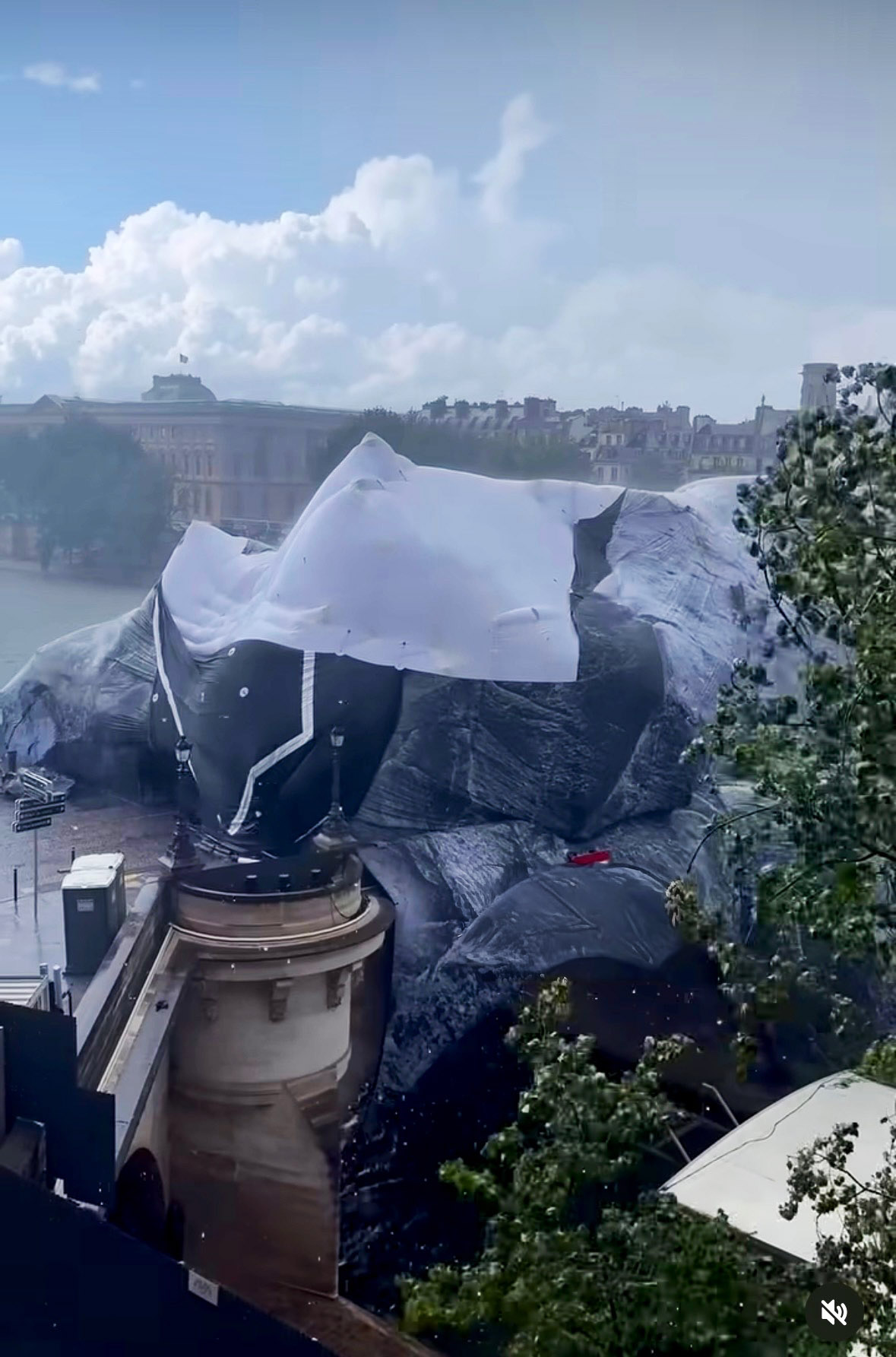
There is something deeply revealing about this image of a bridge wrapped in plastic sheeting, hanging from a framework that takes flight at the very first gust of wind. Not a work that endures. Not a work that challenges time. Simply a work that flees from the weather, much like the creations of our age.
And yet, somewhere, in an air-conditioned gallery, in a glossy catalogue, at an auction where telephones wave about like straw-filled fetuses, this thing has a price. Certainly an indecent one. For this is what the contemporary art market has become: a vast machine for turning emptiness into tax-efficient value. No longer do we look at a work of art; we look at who signed it or who bought it.
Confront the real sculptor, the one who spends years carving stone, breathing marble dust, repeating the same gesture ten times over, and he will be politely told that his work is too classical, too serious, perhaps even too honest. Take that very same sculptor, have him glue plastic onto wire frames, call it an installation, add a four-page text in French and English explaining that the mountains question the boundary between permanence and dissolution in a post-materialist world, and suddenly the collectors arrive.
JR printed giant faces on walls. It is beautiful. It is large. Ultimately, it is inhuman, because today all you really need is audacity. With a good gallery owner and a few carefully framed Instagram photographs, the machinery starts running on its own.
Society no longer judges the artwork or the artist’s labour. It judges the noise surrounding the work, the buzz. Worse still, it is not the artist who is cheating. He does what he can with what the market places before him. The fools are us: the buyers, the spectators, the validators. Those who have collectively decided that the value of a work of art should be measured by the speculation it generates rather than by the emotion it evokes. Those who buy a package worth ten thousand euros and return home satisfied that they have acquired something.
Until the next storm.
Christo’s works, at least, do not take flight unless the artist intended them to. As for JR, the money remains safely tucked away in the right pockets, on the right side of the wind, at Southfork Ranch.
FM