At the end of the nineteenth century, a singular device appeared in Europe’s major cities: the Kaiserpanorama. Now almost forgotten, it nonetheless remains essential for understanding a particular historical regime of vision. This collective optical machine took the form of a circular wooden structure, pierced with small viewing lenses, around which spectators gathered to observe animated stereoscopic images.
Each person looked alone, yet everyone watched together, participating in a public ritual founded on the isolation of the gaze. The Kaiserpanorama granted access to distant cities, exotic landscapes, monuments, ruins, and scenes of everyday life in inaccessible places. An entire world entered a single room, allowing travel without movement, through the sheer intensity of vision.
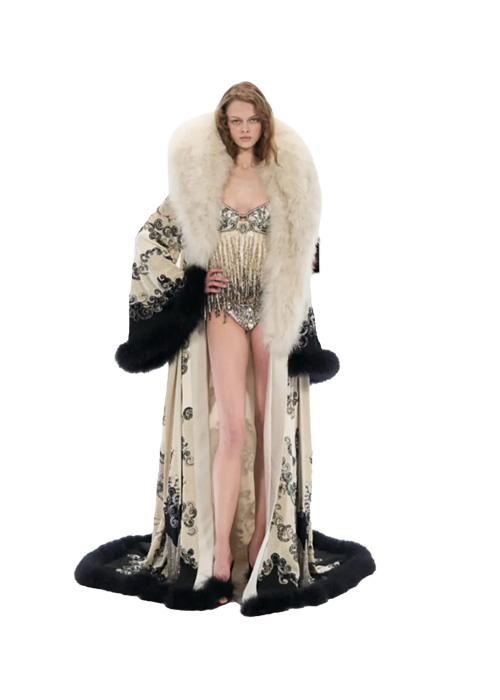
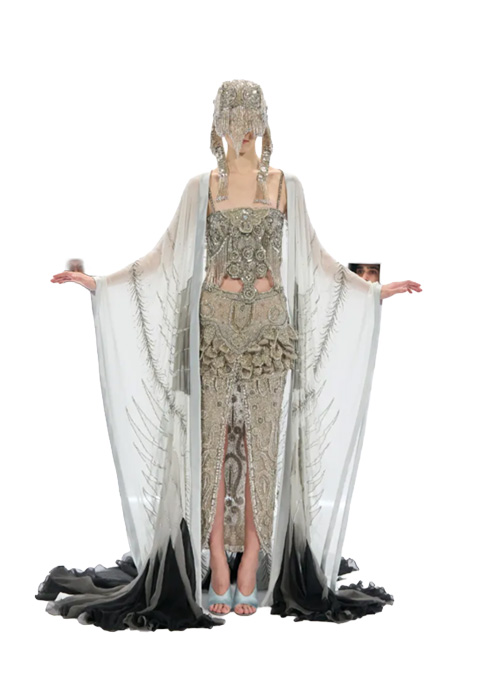
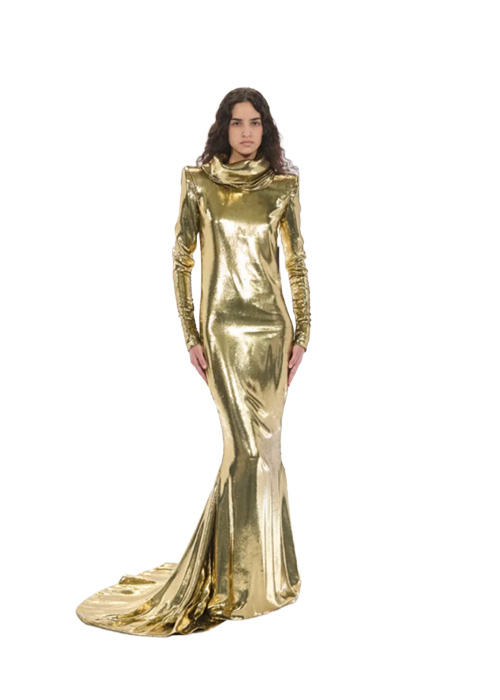
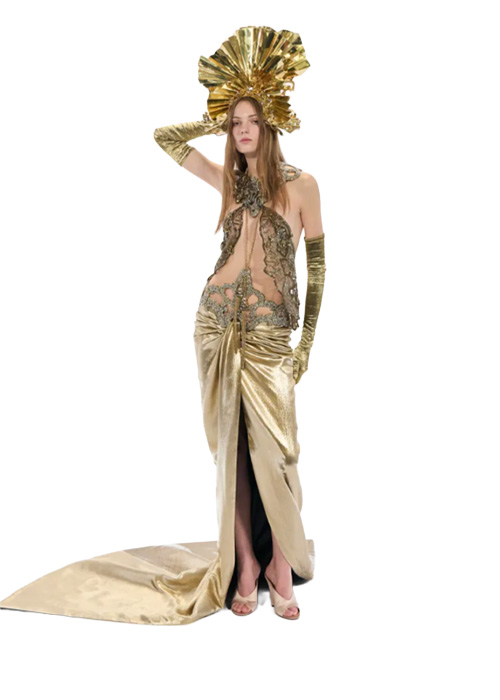
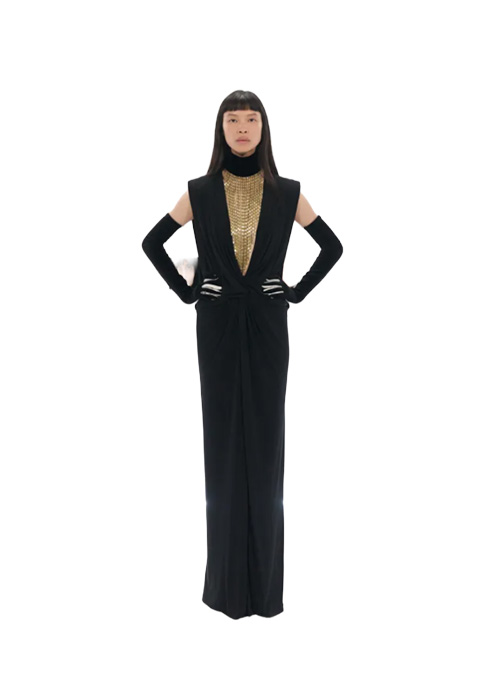
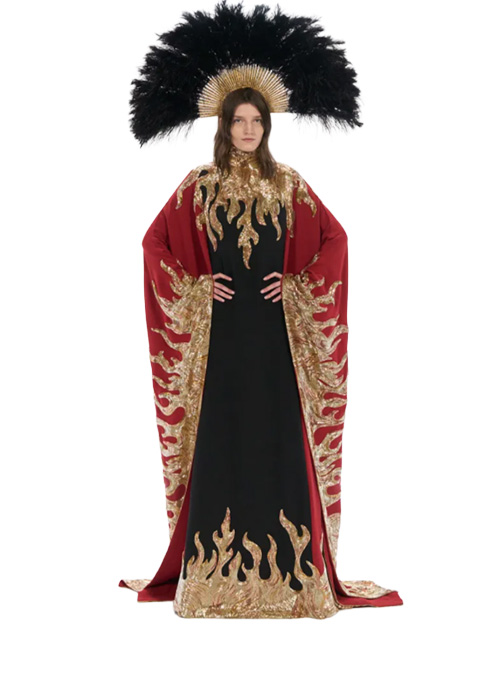
For this Haute Couture collection, the House of Valentino recreated a full-scale Kaiserpanorama, inviting devotees to discover the designs not on a frontal runway, but through a circular apparatus of fragmented vision. Each creation reveals itself through an individual viewing port, in an almost unsettling intimacy, reserved for one gaze at a time.
A fully assumed twenty-first-century peepshow, with the audience turned outward, backs to the exterior, peering through portholes as silhouettes pass by and bodies become images. In doing so, Valentino chooses to slow down, to isolate, to concentrate. Where our era multiplies gazes, the House singularizes them. Where fashion is so often delivered to crowds and screens, it once again becomes an intimate experience.
Within this dispositif, the figure of the media bimbo, omnipresent in the contemporary fashion ecosystem, is implicitly summoned only to be neutralized. The gaze is no longer predatory, distracted, or collective. It is forced into attention. Into patience. Into responsibility. Some silhouettes seemed to have escaped from the graphic reveries of Erté: a white satin slip dress, cut on the bias, brushed by an embroidered ivory velvet coat whose airy train transformed into a sumptuous headdress of ostrich feathers studded with rhinestones. Others summoned the imaginary world of the Ziegfeld Follies or the bewitching shadow of Mata Hari, poised between theater, vertigo, and splendor.
A clear winning move for Alessandro Michele: the one I once called “the devil dressed in Nada” has become the one who “dresses the Nanas of Émile Zola” for Valentino. It required a calm, almost sovereign audacity to stray so decisively from the well-trodden paths of Fashion Week and to dare a collection that seeks neither immediate approval nor the intoxication of noise. Under his direction, the House does not merely produce garments; it constructs a vision, it institutes a world. Never does heritage weigh like a burden, never does innovation present itself as an empty rupture. Everything flows from the same breath, where memory converses with invention, and where couture rediscovers its primary vocation: to move the mind as much as the eye.
And I confess it plainly: I am astonished. Astonished in the way one is before a landscape thought to be familiar, suddenly revealed under a new light. This collection, so different, so resolutely creative, seems born of a silent refusal of ease and of a profound love for the long term. It does not flatter; it persuades. It does not seduce in flashes; it asserts itself through persistence. In a hurried century, it dares duration. In a world saturated with images, it demands the gaze. And this may well be its rarest victory: reminding us that true beauty is not consumed, it is contemplated.
FM