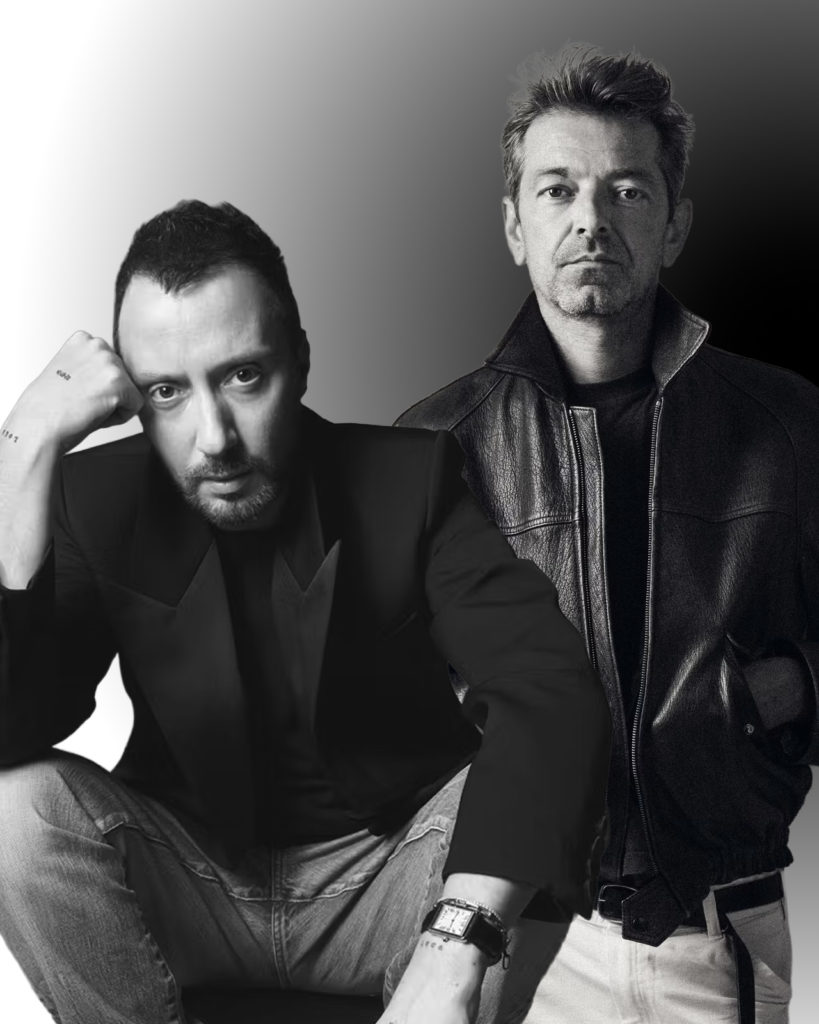
 Pieter Mulier moves through fashion the way some men move through life, with the anxious elegance of those who know destiny enjoys changing its mind at the last moment. As artistic director at Alaïa, he has put breath back into a house once thought frozen, as one might crack open a window in a room admired too long in silence. Since 2021, something has begun to beat again at Alaïa, and Richemont, not exactly known for sentimentality, has grown attached. One does not easily let go of a man who reminds you that clothing can still have a soul.
And yet Milan is calling. Versace, that house which has always lived too loudly to die quietly, is looking for its future in an old mirror. Mulier’s name is spoken the way a possible love is spoken of, never made official, always feared. Nothing is signed, everything is negotiated, and in this hesitation lies a very novelistic truth: fashion, too, is afraid of making a mistake.
At Prada, which watches over Versace like a recently adopted child, Mulier has always been seen as the man capable of inventing tomorrow without betraying yesterday. That is reassuring. Lorenzo Bertelli, the new executive chairman, does not want a noisy revolution. He dreams of a return to fundamentals, to Gianni’s baroque opulence, to Donatella’s unapologetic sensuality, far from conceptual detours. Fidelity, in Italy, remains a cardinal virtue, even when it is theatrical.
Anthony Vaccarello’s name floated briefly, like a rumor too well dressed to be true, then dissolved. Vaccarello belongs to Saint Laurent the way a writer belongs to his language. One does not move that kind of bond without consequences.
Mulier, meanwhile, carries another story with him, that of Raf Simons, of quiet loyalties and workshops crossed like schools of discipline. Jil Sander, Dior, Calvin Klein. He was the efficient shadow, the right hand, sometimes the witness to experiments that did not always end in miracles. But fashion has a fondness for men who have learned how to lose. They draw tomorrow better.
As for Olivier Rousteing, he is out of the picture. Fashion is far too serious a matter to be improvised. It demands work, reading, and a certain amount of solitude. The rest comes later.
And so this story unfolds, made of waiting, calculations, and poorly hidden desires. As often happens, the real runway is not yet on the catwalk. It is played out in corridors, in silences, and in that fragile minute when a man decides whether to remain faithful to what he has saved or to risk what he might yet become.
FM