
THE MOST OVERRATED FIGURE IN FASHION’S THEATRE
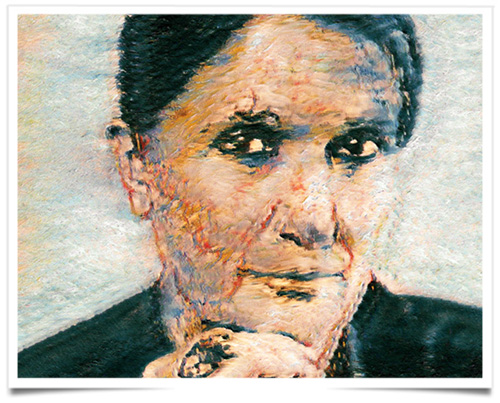 There are, in the history of fashion, figures who sculpt time like marble sculptors, and others who sculpt above all their own legend, the way one sculpts the mushroom of a Nymph. Maria Grazia Chiuri undoubtedly belongs to this latter category, that iconoclastic brotherhood that confuses communication with creation and the slogan with vision.
After ten years of absence, here she is returning to Rome, the Eternal City, paradoxically treated as nothing more than a platform for personal storytelling. She takes over Fendi, a house she had known at 24, at a time when one still learned a craft instead of explaining it in TEDx interviews.
In her time she contributed to the rise of accessories, then navigated to Valentino for double the salary, and triple at Dior, one wonders about her great disinterestedness. Thus the opposite of enthusiasm has become the most stable currency in the industry: one may lack vision, but never “dynamism for well-structured contracts.”
She recounts, like all the priests of the fashion religion, that as a child she made bags from fabric scraps. This anecdote is the original sin of contemporary fashion discourse: everyone, since the dawn of the runway, claims to have been a textile bricolage genius at six years old. A standardized founding myth, as authentic as a monogrammed bag produced by the millions.
And then comes the contemporary profession of faith: fashion is joy, desire, carefreeness, but the world is gloomy, therefore one must be optimistic, engage in dialogue, understand the times.
A gentle liturgy from the group’s marketing departments, consensual, apolitical, where discourse replaces the garment, where optimism becomes a printed motif, where the complexity of the world is reduced to a press-release sentence.
Thus is born the Florentine and sectarian designer, iconoclastic by press release, revolutionary by typography, priestess of a ready-to-wear feminism calibrated for shop windows. A priestess who speaks of women but often designs slogans for consumers, confusing empowerment with merchandising the way one confuses a manifesto with a tote bag.
Fashion, once the art of disturbance and form, becomes in her hands a parish bulletin of moral good taste, an aesthetic of edification, where audacity is replaced by virtue, the cut by the cause, and creation by conversation.