
FODAY DUMBUYA 2026 LONDON
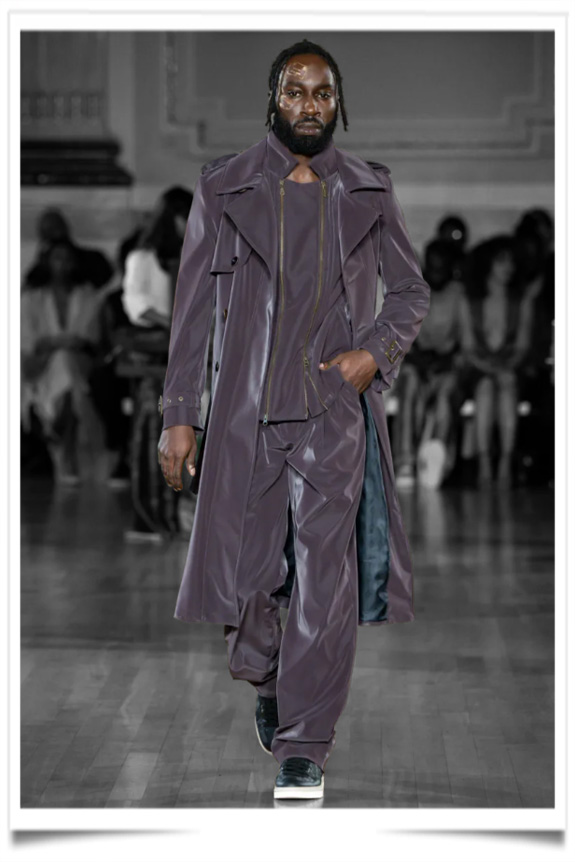 Foday Dumbuya’s latest “collection” was a public trial of the abysmal mediocrity of contemporary fashion, closer to a declaration of war than to a runway show. So-called traditional catwalks emerge from dusty altars of déjà-vu, and seemed to burn under the impact of this textile barrage, as if originality had returned to reclaim its territory through bursts of color and memory.
Ikat, tartan, embroidered cotton, printed silk spoke like living archives. Each fiber claimed a port, an exile, a forgotten story. On stage, Harris looms, impassive like monuments, opposed their stubborn slowness to the tyranny of the disposable. The weavers, solemn, were weaving something other than fabrics: a patient revolt, a call against cultural amnesia.
The silhouettes did not walk, they exploded. Insolent colors, sharp cuts, military shapes transformed into utopian banners. Dresses, trenches, and trousers became oceans, skies, continents, claiming an almost insolent freedom. Dumbuya was not walking the tightrope of fashionable audacity: he made it vibrate like a blade, mixing printed denim, raffia, Indian embroideries and Chinese silks into a political geography of clothing.
Every detail became an act of resistance: a black flower like a conviction, a white coat twisting the idea of order, a tartan pulverizing borders. This was not a fashion moment but an aesthetic and intellectual insurrection, a burst of meaning fired point-blank at conformity. Why not!
FM