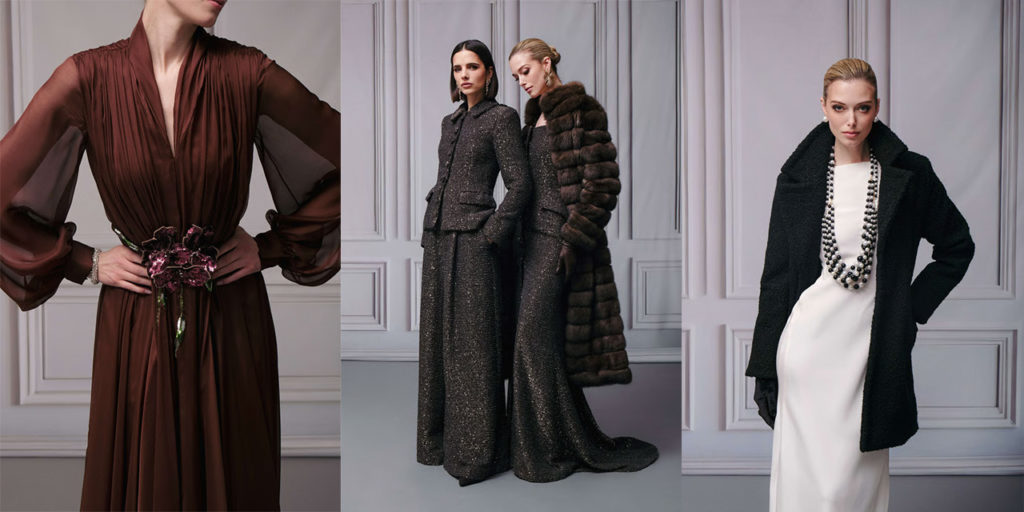
FUR, POWER AND CONTROVERSY: THE BASSO ENIGMA
 Dennis Basso embodies this almost timeless figure of American luxury, a designer who built his legend on fur, a material both spectacular and deeply controversial. His rise, sealed in the 1980s by the endorsement of New York’s elites, tells as much the story of fashion as it does that of a particular relationship to power, prestige, and social visibility.
Becoming the “furrier of wealthy women” made Basso a symbol: that of a luxury world that continues to celebrate fur despite decades of criticism, activist campaigns, and ethical shifts adopted by much of the industry. While many fashion houses have abandoned the material in the name of animal welfare and social pressure, Basso chose continuity, claiming fur as a field for aesthetic experimentation, almost playful, where sequins and bold colors replace the gravity of the debate.
This stance is neither provocative nor militant; it reveals a world in which fur remains a marker of symbolic power, a social code reserved for an elite that can afford to ignore the controversy.
Basso appears less as a provocateur than as a luxurious relic of an era when fur was synonymous with unquestioned elegance and ethical concerns lay outside the frame. His trajectory raises a subtle yet persistent question: can luxury continue to ignore the world around it without turning into a gleaming but anachronistic relic?
FM