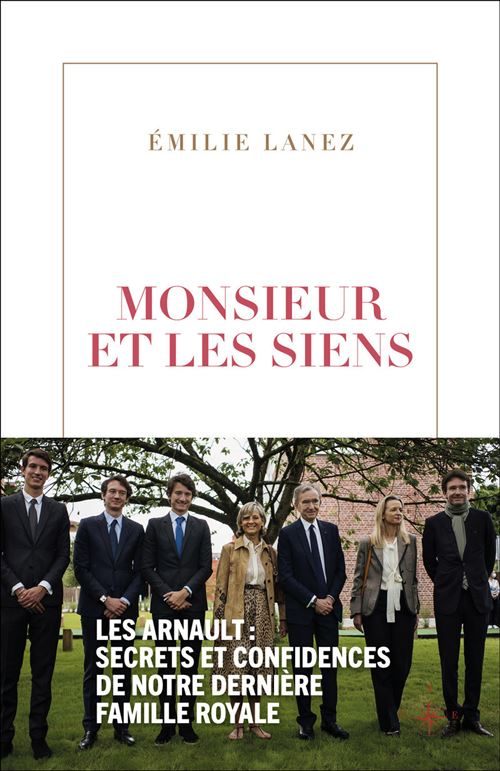
THE ARNAULTS: THE LAST KINGS OF FRANCE
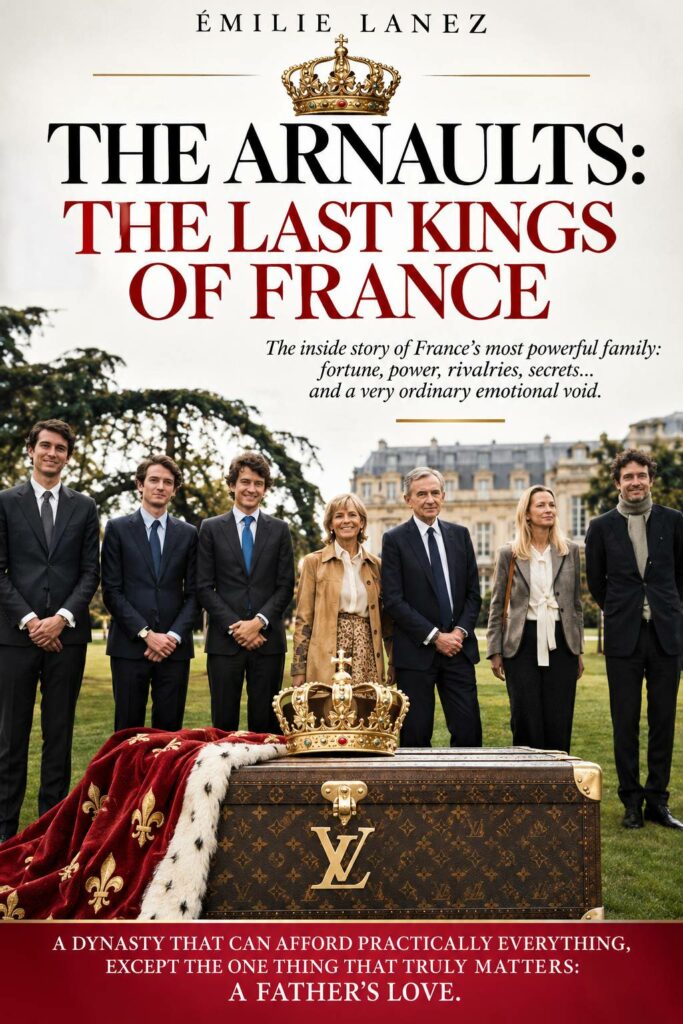
Before writing this book, she had been warned: “Don’t touch on them.” “An impossible investigation.” Others, somewhat more charitable, suggested she might as well try blowing on nitroglycerine. But she replied that nitroglycerine should be handled with care, not with bows and curtsies. By venturing into the most powerful family in France a dynasty resembling a walk-in freezer, where nobody speaks for fear that words might freeze before leaving their lips she may well have just brought her journalistic career to a spectacular end.
Four hundred billion euros in market capitalisation. At that point, words become obsolete. Only zeros remain. The Arnault family, the last Kings of France. Unlike their predecessors the real ones, whom the French rather rashly decided to shorten during the Revolution this family has learned its lesson: reign without a crown. Much safer. Nothing too tight around the neck.
They loom over politics, hold the economy by its exquisitely tailored lapels, feed the arts as one feeds an obedient performing dog, and gently steer diplomacy with a few strategically placed handbags. With a raised eyebrow and a handshake from Donald, Uncle Scrooge quietly polishes his empire of influence.
And yet, we know almost nothing about them. Nothing! Cashmere-clad sphinxes building their own pyramid of luxury. They guard their image with the obsessive determination of a tax evader concealing a secret cellar. Only one occasionally emerges from the shadows: Bernard, His Lordship, President of the LV kingdom, known simply as “Monsieur” in the corridors, a title uttered with the awe and trembling usually reserved for Japanese emperors and minor deities. A man padlocked, bolted and hermetically sealed like a Swiss bank vault albeit one wearing Berluti shoes.
At the weekly family luncheon, that sacred ritual, the Monday Mass, the patriarch finally erupts. The press has been reporting on quarrels, succession battles and the delightful little cruelties of drawing-room warfare. So he thunders at his five heirs:
“The next one who speaks to a journalist is FIRED!”
Fired! From his own family!
One wonders whether the man is a father or a human resources director. In that household, apparently, the distinction is purely administrative.
And here comes the mystery, the delicious absurdity of it all: they all talk. For hours. To the author, Émilie “Jolie”. They pour out their hearts, their secrets, their resentments, the entire family laundry basket. Why?
Because pain, eventually, demands an audience.
Perhaps these poor billionaire children are simply hoping that their sorrow will finally burst into daylight, that Daddy might, for once, turn around and notice them. We tend to imagine that cries echo more loudly in palaces than in slums. But that’s merely because the ceilings are higher.
The children of the first marriage don’t get along with those of the second. The younger ones, encouraged by Mummy, fear being pushed aside by their older siblings, while the elder heirs can already feel the younger generation breathing down their necks.
Nothing terribly original. The history of families is largely the history of siblings glaring at one another across an inheritance.
“Personally, I’m estranged from my brothers and sister. Not over money I couldn’t care less about that but because they insulted my intelligence.”
And to add a little extra spice to this already indigestible family broth, enter Xavier “Honey”, Delphine’s partner, the son-in-law, a former shopkeeper from Rue Saint-Denis. A powerful man in his own right, and one whom the patriarch’s wife reportedly detests with the sacred fury of a Roman vestal virgin. An upstart son-in-law, self-made, outrageously wealthy, and — horror of horrors — without the proper pedigree or education.
How utterly unforgivable!
And so Olympus begins to resemble a Shakespearean tragedy, only with central heating and designer upholstery.
The world’s ninth-richest man, a master of every financial manoeuvre known to civilisation, remains utterly incapable of curing a broken heart or comforting an unhappy child.
You can buy cathedrals, vineyards, fashion houses, entire avenues of luxury boutiques. But you cannot buy a father’s loving gaze.
That, alas, is the one luxury house that will never be for sale: the house of a loving father.
I know something about that myself. My own father never once told me he loved me, and even now, past the age of seventy, the wound remains.
And therein lies the cruelest irony of all: a family that can afford practically everything, except the one thing that truly matters.
This, then, is a book that absolutely deserves to be read. Madame Lanez has accomplished something remarkable: she has exposed, with disarming simplicity, the torments of a French family whose fortune may be astronomical, but whose emotional bankruptcy is painfully ordinary.
FM