
VILLA SAVOYE, OR ARCHITECTURE TRANSFORMED INTO POETRY
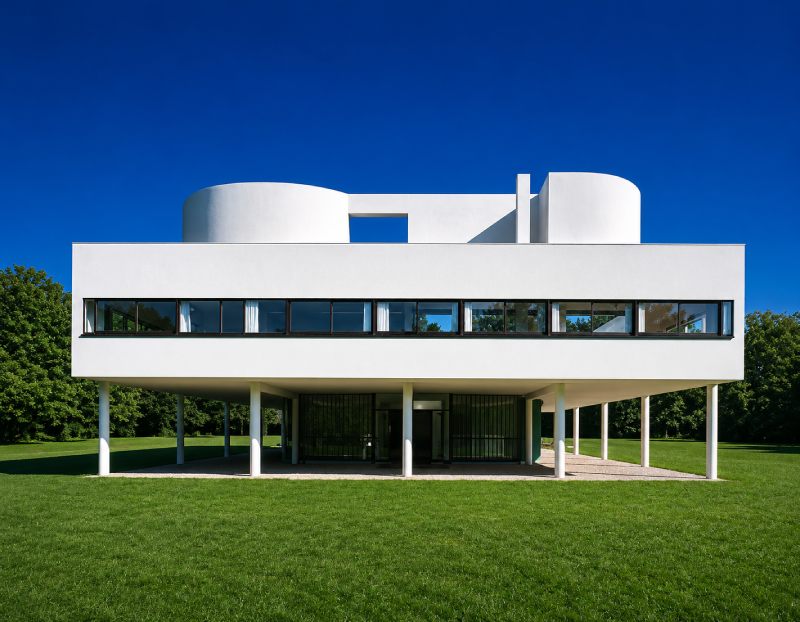
There are houses that seem to have been conceived to defy time, gravity, and the conventions of mankind. In the midst of an expansive lawn, beneath the silent guardianship of century-old oaks, rises a dwelling that appears to belong less to the earth than to the realm of the spirit. This is the chronicle of an architectural masterpiece that has, for as long as I can remember, held me under its singular spell.
It was here, in Poissy, between 1929 and 1931, that Le Corbusier and his cousin Pierre Jeanneret brought Villa Savoye into being, commissioned by a couple who wished to make it their home. Unburdened by the prejudices of traditional architecture, the Savoyes granted their architects that rarest of gifts: the freedom from which immortal works are sometimes born.
Suspended between heaven and earth, resting upon slender matchsticks, it seems to defy the very laws of gravity, weightless as an apparition, like a spider delicately poised upon the divine curves of a goddess. Here, around a vast terrace transformed into a hanging garden, unfold the living room, the kitchen and its patio, the bedrooms and their bathrooms, all bathed in the generous radiance that pours through the long expanses of glass.
Beauty resides not in ornament, but in the purity of restraint. And within this white, abstract sculpture, Le Corbusier succeeded in bestowing upon reason the grace of poetry, and upon geometry the nobility of an ideal. Meticulously restored and inscribed in 2016 on the UNESCO World Heritage List as part of Le Corbusier’s architectural legacy, Villa Savoye remains one of the most striking testimonies to twentieth-century modernity.
Nearly a century after its creation, it still seems to herald a future that mankind has yet to finish imagining, if only we might dare to dream again. For true masterpieces do not grow old. They journey through the ages with that serene majesty belonging to ideas which, one day, possessed the courage to be ahead of their time.
FM