
ANDERSON’S RETURN IN FOUR LEAVES
The winds of winter are about to blow over the ancient stones of Trinity College Dublin, as a humble invitation card, like the herald∗ (Middle Ages: an officer whose duty was to carry messages) of a new destiny, announces that Jonathan Anderson will unveil Dior’s pre-fall show on the fourth day of December.
For it was in this very city that young Anderson once took his first steps in the noble theatre of fabric, within the galleries of Brown Thomas, before his art extended to the brewers of dark Guinness under the banner of J.W. Anderson. And yet never before had he offered his native land the spectacle of a collection shaped by his own hand. So he returns, not merely as a designer, but as a son summoned back by the very soil that saw him born.
And see how he breaks with the old customs. Where, under the reign of Maria, the pre-fall collections first appeared to the eye as illuminated pages before travelling the kingdoms in lavish processions, Anderson overturns the established order. Since Kyoto hosted, in the year two thousand twenty-five, the last of his processions, silence had settled in. But now a new chapter opens, whose hidden design no one yet knows.
The house of Dior reveals nothing of the reasons behind this change of hour and season. It does, however, recall that Dublin was the birthplace of Carmel Snow, sovereign of the American pages of Harper’s Bazaar — the very woman who, struck with wonder before the first vision of the master Christian Dior in the year nineteen forty-seven, forged those immortal words: “New Look.” Thus, with a stroke of the pen, she gave a name to a revolution.
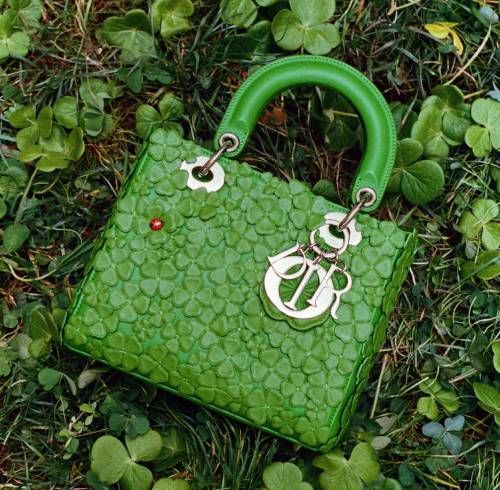
As for the invitation card, it is adorned with this illustrious phrase, like a coat of arms inherited from glorious times, accompanied by a four-leaf clover. This emblem, which Anderson seems to have chosen to guide his reign at Dior, should not be mistaken for the modest shamrock of Ireland, whose three leaves have for centuries carried the memory of the island. One promises fortune; the other embodies the soul of a people. Between these two symbols may lie the whole art of the couturier: uniting the grace of chance with the permanence of legend. Which goes to show that a bit of luck from Eire doesn’t always lead all the way to Dublin.
FM