
THE TORMENTS OF THE MODERN WOMAN
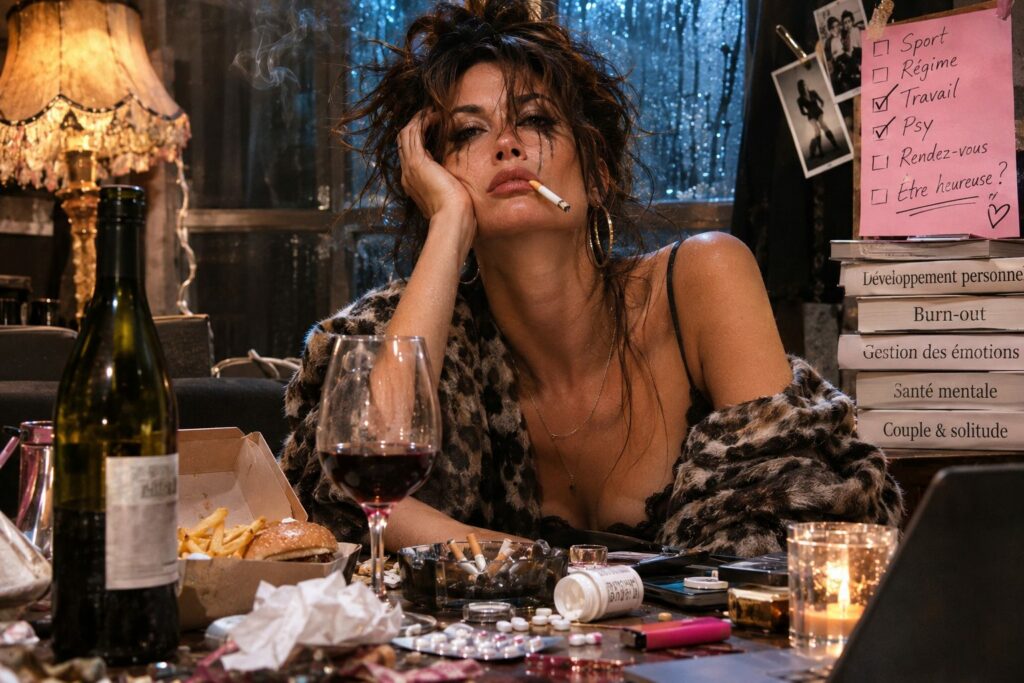
Once upon a time, my mother dreamed of freedom. She wanted to work, to have control over her own body and her own money the ultimate luxuries of her generation. Her fellow women eventually won a good deal of those freedoms. Alas, nobody had warned them that liberation would come with a gym membership, three dating apps, a therapist, plumped-up lips, and a €180 night cream.
The modern woman is a fascinating creature. She wants to be independent, yet dreams of being taken care of. She demands equality, yet finds it charming when a man pays for dinner. She insists on a sensitive man, yet grows concerned when he cries more than she does. She wants an emotionally evolved partner, provided he can still assemble a wardrobe, change a tyre, and kill a spider. In short, she wants a new kind of man, but with all the old features included.
At twenty, she wants to be desired. At thirty, respected. At forty, admired. At fifty, preserved. At sixty, she would simply like to be left the hell alone. But society, never one to miss an opportunity to be helpful, offers her collagen, injections, hormones, and a few discreet procedures so that she may finally look the way she did before she actually started living.
Aging, incidentally, has become a fashion faux pas. A wrinkle is negligence, a grey hair a surrender, a belly a lack of discipline. She is constantly told to embrace her age while being offered every conceivable means of erasing it. Magazines celebrate the beauty of mature women, provided they look sufficiently young not to qualify as such.
As for love, that ancient romantic affliction, it has become a recruitment exercise. One no longer meets a man; one examines his profile: height, occupation, income, emotional assets, marital history, and communication skills. The first date resembles a job interview, the second a psychological audit, and the third — when there is one — a merger-and-acquisition negotiation. Romance is dead, but at least a few excellent restaurants remain.
The modern woman no longer falls in love, either: she identifies her emotional needs. And when she leaves, she is escaping a toxic relationship. On social media, the spectacle reaches new heights. She must be authentic, but photogenic. Spontaneous, but perfectly lit. Natural, but retouched. She posts a photograph captioned “Just me,” after forty-seven attempts, two filters, and an hour of negotiations with her own reflection. Narcissus, these days, would probably have a public relations agency.
The most delightful part is this permanent obligation to be happy. A sad woman must work on herself. A tired woman must learn to slow down. An angry woman must manage her emotions. A single woman must learn to enjoy her solitude. A married woman must keep the spark alive. Whatever she does, there is always an expert somewhere ready to explain that she is doing it wrong. Meanwhile, the modern man, comfortably settled on his sofa, asks her why she has to be so complicated.
And yet, one must give her credit for something: despite the demands, the contradictions, the disappointments, the diets, and the breakups, she keeps moving forward often with humour, sometimes with fury, and occasionally in a pair of outrageously expensive stilettos.
For the real tragedy of the modern woman is not that she wants to have it all. It is that, after centuries of being told what she ought to be, she is now criticised for not knowing who she is!
And the greatest irony of all is that she has finally won the right to do whatever she pleases.
Provided, of course, that she does it perfectly.
Catherine, I love you anyway.
FM