
DIOR: A COLLECTION WITH A SOUL
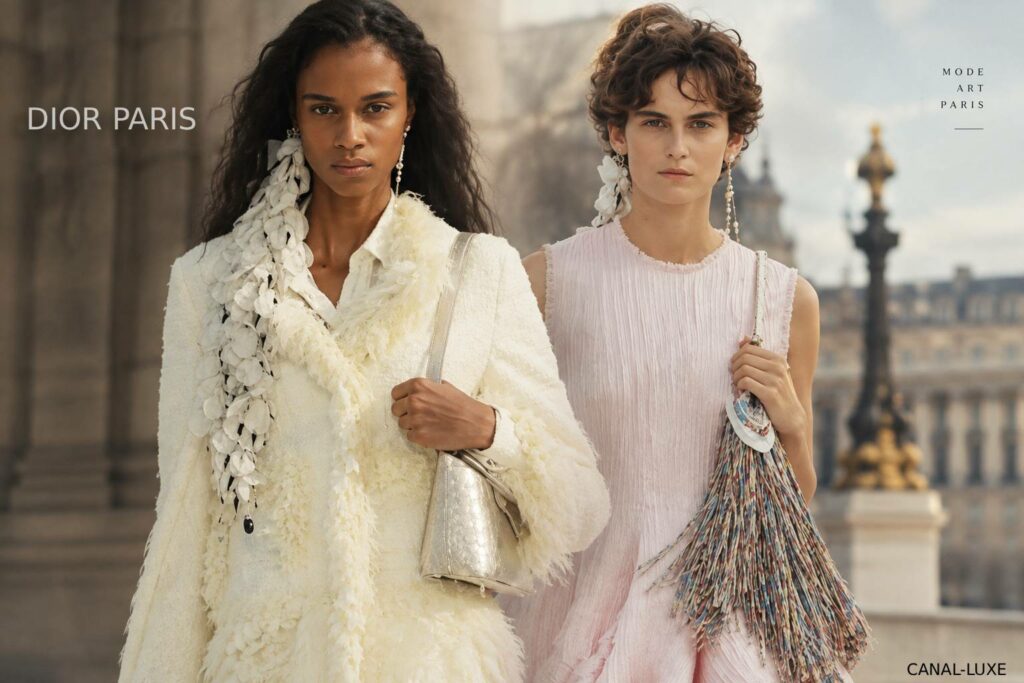
I hadn’t seen such a wearable and creative collection in a truly long time. Here, Jonathan Anderson signs off on a wardrobe of absolute mastery, sustained by the ateliers those petites mains of couture and by the legacy of the master of Granville. Christian Dior himself, a son of this Normandy of mists and cliffs, would not have disowned this elegance that never screams.
The real tour de force lies here: everything is wearable. With every look that passed, the same question crossed my mind: would I buy this outfit for my wife? Or for myself, if I were a woman? And in that case, I would have bought virtually everything.
Chateaubriand wrote that we do not console ourselves for what has been, and that we dream of what might be. This phrase, from Memoirs from Beyond the Grave, says in its own way what fashion must always achieve: to stir nostalgia while promising a future. This is how Anderson operates. He does not ape the house’s past; he breathes new life into it, with that sovereign melancholy of the Breton vicount, that slightly sad nobility of lines that glide over the body like a well-balanced sentence.
Making clothes to sell to clients. What could be simpler, and yet what could be rarer today? Clients are entering boutiques less and less; there is constant talk of “desirability”, that rather hollow word from marketing seminars. Yet here, the desire is there palpable, generous.
So here he is, the little Irish prince, this slight figure who has just laid hands on the greatest house in the world, the one known across every continent, the one where even a lipstick, in the depths of Africa, whispers something to a child: Dior. A global brand, set to send figures skyrocketing with an unparalleled collection. Fashion, like literature, is never greater than when it knows how to remain human. Here, it is.
FM