
MAUD FRIZON – A FREE-SPIRITED PARISIAN
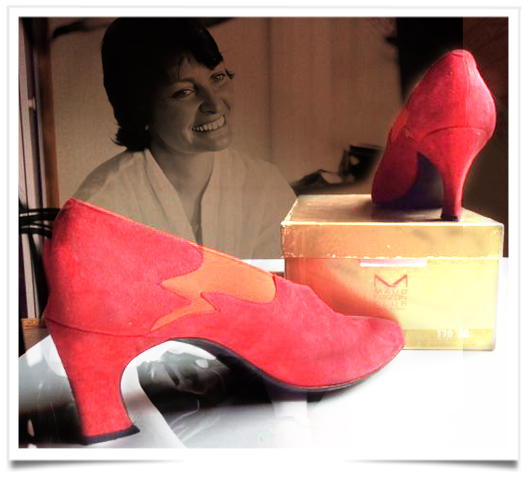 In the grand history of Parisian fashion, certain personalities leave a singular, almost electric imprint. Maud Frizon was one of them. I met her at a time when she was considering creating a perfume, while I came with all my expertise in bottle design. That encounter struck me with its simplicity and liveliness: she spoke of creation as a serious game, with sparkling eyes and a constant curiosity for materials, shapes, and sensations.
It is hardly surprising for a woman who, from the late 1960s onward, would shake up the world of footwear. Her story truly begins in 1969, when she presented her first creations, notably unveiling spectacular suede over-the-knee boots, fastened with belt buckles worthy of the Musketeers. The silhouette was bold, almost theatrical. It was already clear that the young designer was not seeking discretion.
In 1970, she opened the first of two boutiques in the Latin Quarter, named France Favor. Very quickly, the label took her own name: Maud Frizon. Alongside her husband and partner, Luigi de Marco, she built a brand that would span nearly three decades of fashion. The boutique soon became a destination for women who loved shoes that told a story.
Maud had a very personal way of approaching creation. She loved contrasts, the mixing of materials, and unexpected color combinations. Her pumps could combine animal skins, colored leathers, and cork heels, with an almost playful sense of detail. Her most famous invention remains the “cone heel,” which became emblematic in the 1980s. Its flared, almost sculptural shape gave pumps and boots a striking graphic quality while offering surprising comfort.
When we spoke about creation during our meeting, she often described the shoe as an object of balance. In her view, a woman should be able to walk freely, even in the most spectacular designs. A simple idea, yet revolutionary at a time when style often took precedence over comfort.
Naturally, fashion designers quickly took notice of her work. In 1982, her pumps appeared in Azzedine Alaïa’s first collection presented at Bergdorf Goodman in New York. They also complemented the silhouettes of Sonia Rykiel, whose free spirit perfectly matched Frizon’s.
The singer Cher became one of her most enthusiastic clients. It is said that she could leave a boutique with dozens of pairs in a single visit. Perhaps what was most striking about Maud Frizon, beyond her creations, was her temperament. She possessed that slightly carefree elegance, typical of creators who never wished to fit into a mold.
I remember a woman who was both a muse and endlessly curious, equally capable of speaking about a rare leather and an olfactory emotion. That is likely why the idea of creating a perfume with her felt so natural: her universe was already deeply sensory.
For more than thirty years, Maud Frizon left her mark on fashion. Even today, her bold shapes and sculptural heels continue to inspire designers. As if each pair still carried a trace of her spirit: free, inventive, and unmistakably Parisian.
FM