
RAPPERS, LUXURY’S NEW CREATIVE DIRECTORS
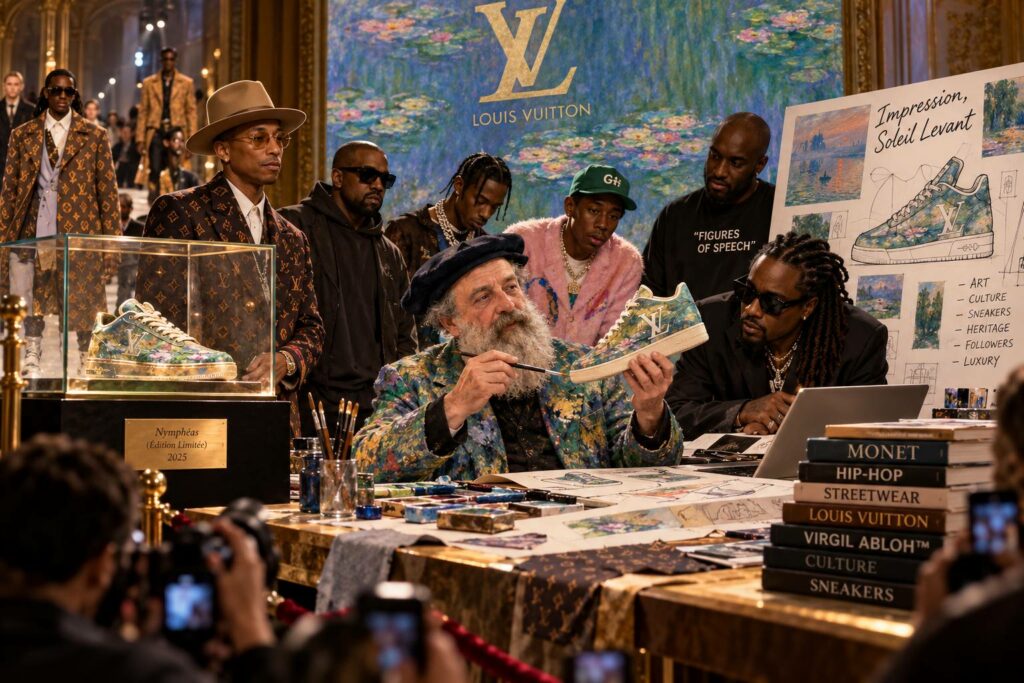
There was a time when a rapper could only approach fashion through the back door: a music video, a gold chain, a name-drop in a verse. Today, he walks in through the front door, badge and business card in hand. The latest example: Wale, the Grammy-nominated rapper, has just been appointed Chief Creative Officer and partner at CapSole, a company specializing in sneaker preservation. Sneakers, once tossed aside when worn out, are now treated like masterpieces. And if we preserve sneakers the way we preserve Water Lilies, the question becomes almost serious: who is the curator, and above all, who is the artist?
Wale is no isolated case; he is a symptom of the times. Pharrell Williams at Louis Vuitton, Kanye West and his Yeezys, Travis Scott, Tyler, the Creator, and the towering shadow of Virgil Abloh: today, it is largely designers of African descent who dominate the luxury sneaker scene. Those who once played the role of “inspiration” (the polite term for “free source of ideas”) are now signing collections and setting prices. After decades of copying Black culture and rebranding it as “streetwear” the moment it appeared in the shop windows of Avenue Montaigne, luxury fashion has finally realized that partnering with the source might be the smarter move.
Then there is the ripple effect. By repeatedly handing the keys to fashion houses to unconventional figures, such as “Jacques Musmuse “and “Olivier Rous-Tintin”, the fashion industry has sent a message to an entire generation: scissors are no longer a prerequisite. Genius no longer lies in cutting or draping fabric, but in borrowing other people’s ideas and rearranging them with enough confidence to make them seem new. Sampling has conquered the wardrobe, and since brands now count followers rather than stitches, everyone is thinking: “Why not me?” Virgil Abloh, gone far too soon, was the master of this approach, and his heirs dream of following Pharrell all the way to Vuitton, armed with nothing more than a mood board and a few million followers.
So, Monet at Vuitton? His debut collection, Impression, Sunrise, would have critics talking about a “break with tradition” and buyers waiting for a Nike collab. More seriously, the comparison holds up: the Impressionists, rejected by the Salon, eventually found their way onto museum walls, while rappers, long kept at arm’s length from the runways, are now taking the helm of couture houses. The same cycle repeats itself: contempt, tolerance, appropriation, canonization. Luxury fashion spent decades pretending to dictate culture; now it follows its lead, arriving a little late and with a credit card in hand. The question remains whether, twenty years from now, history will remember the work itself or merely the follower count.
FM