THREE SHOCKS FOR A NEW FASHION CYCLE
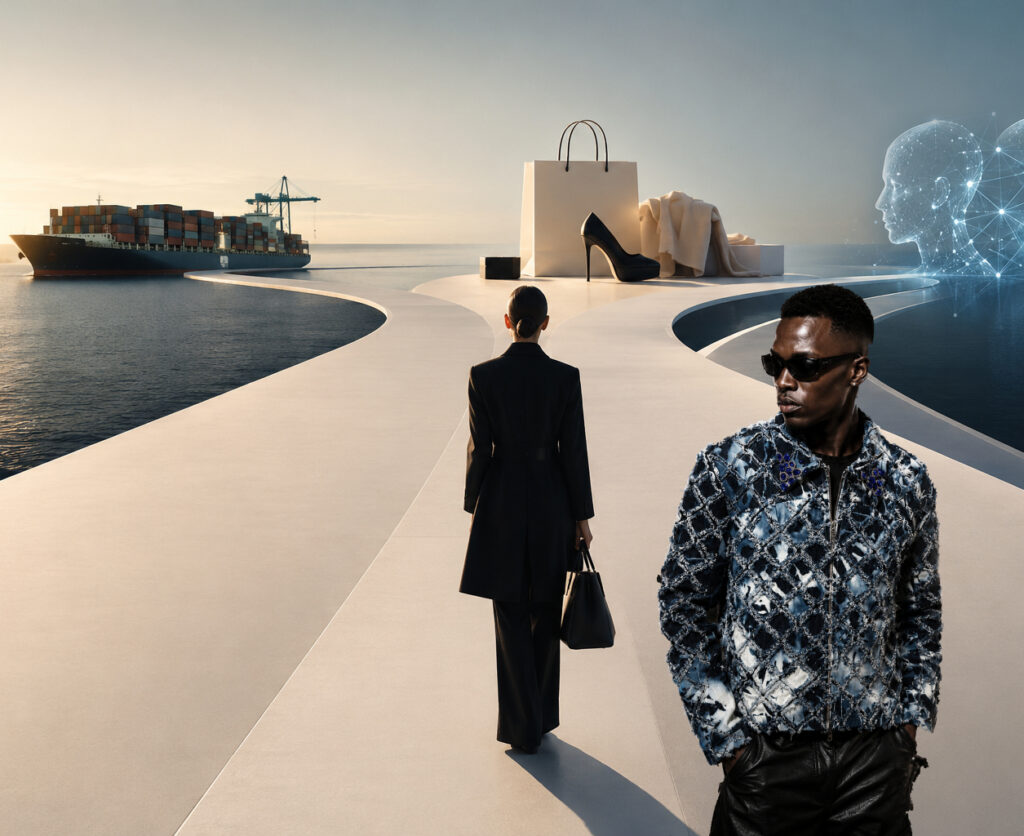
Here is my vision for 2027, in two words: less uncertainty, more instability. The time when leaders could simply wait for turbulence to dissipate is over. In fashion, companies will now have to navigate an environment where shocks no longer occur one after another: they accumulate, interact with one another, and reinforce each other. Three major disruptions, in particular, are set to redraw the rules of the game for the industry.
Global trade, as well as U.S. tariffs, have reshaped trade routes, forcing brands and suppliers to urgently rethink their supply chains. Consumers, meanwhile, are making increasingly complex budget trade-offs. They are spending less on fashion and more on other priorities, such as wellness and health. The rapid rise of artificial intelligence is also disrupting established business models. These three trends are not isolated accidents: they are part of a deeper transformation that Canal-luxe.org has been observing across the sector for the past ten years.
And there is a revealing shift in vocabulary. Perhaps it is the most telling indicator of all: the word most frequently used by industry leaders is no longer “uncertainty,” but “difficult.” This distinction matters because “uncertainty” suggests a temporary situation, with the expectation that things will eventually return to normal. “Difficult,” by contrast, suggests an established reality that companies must now adapt to over the long term. In other words, the industry is no longer asking when things will become stable again, but how to operate in a state of permanent instability.
The rise in pessimism is clear, but it is not unanimous: one quarter of executives, on the contrary, see opportunities to seize. Nevertheless, distrust toward North America has intensified further, and this is the strongest signal of the break with the past. It is the market causing the greatest concern, directly linked to the new tariffs. China, by contrast, is beginning to see a slight improvement in perception, even though it is still broadly considered unpromising for 2027. Sentiment is improving, even though the underlying fundamentals have not yet changed.
The central message of my analysis is simple: stability is not coming back, and that is no longer the question. The challenge for 2026–2027 is not to wait for the environment to calm down, but to develop the ability to adapt quickly and keep moving forward on three shifting fronts: trade, consumers, and technology. The brands that perform best will be those capable of adjusting their strategies quickly, rather than those waiting for a return to normal.
FM