
THE ECHO OF WOLVES AND THE SACRIFICE OF THE UNSEEN
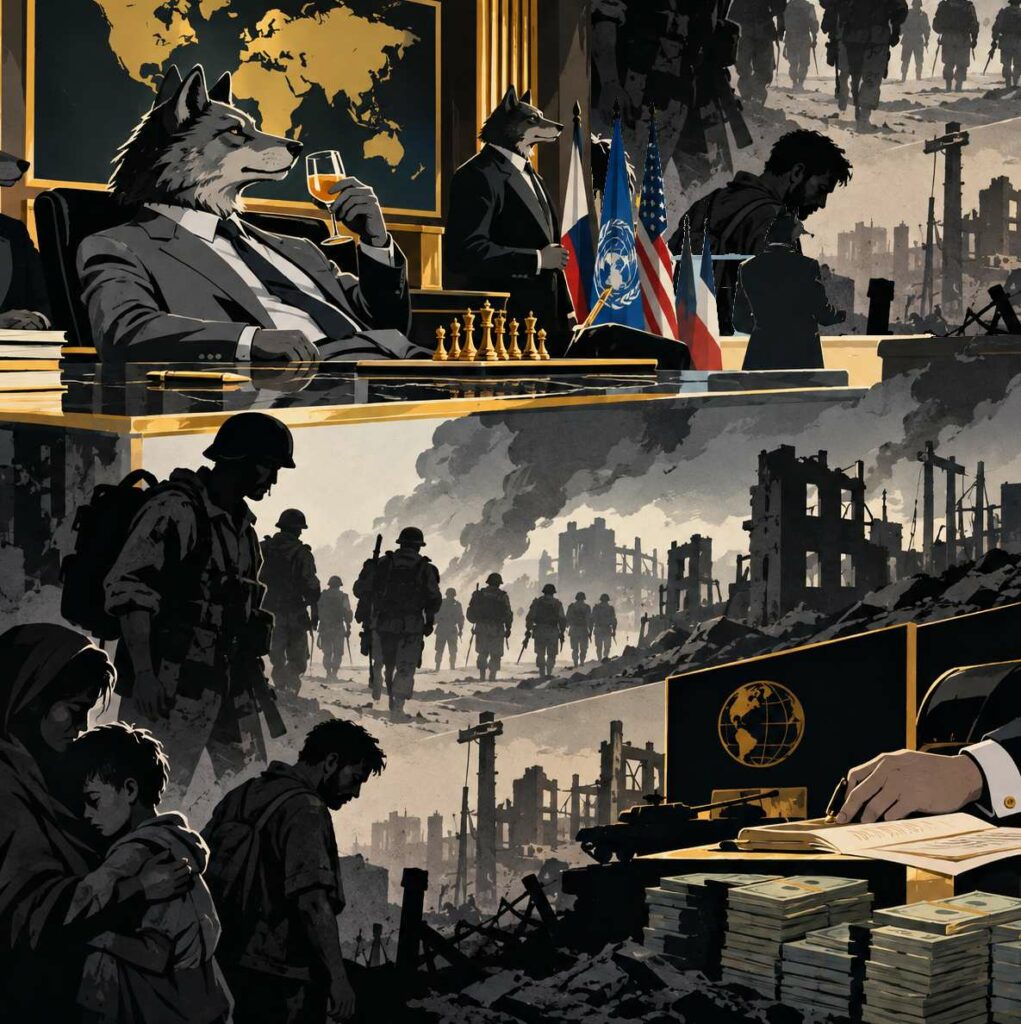
There is one thing I have learned, in this century that never tires of devouring itself: the most dangerous wolves never wear fur. They wear grey suits, they keep offices lined with cold marble and twenty-four-carat gold, and they redraw the borders of the world with the same nonchalance as men playing bridge between two appointments.
I have known them, these masters of illusion. They speak of peace the way other men speak of the weather, with a lightness that costs them nothing, even as that same hand signs the contracts that will rain iron down upon cities they will never visit. They wave flags with touching fervor. But I have never once seen any of these men shed a single drop of his own blood for his country. Theirs is a breed apart the ones who invented patriotism by proxy.
For here is the sleight of hand, and it is as old as human folly itself: when the cannon begins to sound, it is never their sons who board the trains. The sons of the powerful have already slipped away to an island, a chalet, some nameless place on a map the drones do not know. For them, war is a game of chess watched from the terrace, glass in hand, as they move pawns who happen to have a beating heart and a weeping mother.
And so flesh is needed it is always needed and that flesh is sought where it comes cheap: among the lamplighters, the laborers, the men of no rank, whose only fortune lies in their two arms. They are torn from the smell of their morning coffee, from the wife who called them in to supper, and flung into the mud to die in the place of those who decided they must die. Meanwhile, from the towers, men watch. It is a specialty of our species, this extraordinary capacity to observe the misfortune of others with the satisfaction of duty fulfilled.
And then the plundering begins, for there is always a plundering that proceeds almost discreetly. In a few weeks of thunder and smoke, fifty years of sweat are erased—fifty years a man spent building something that resembled him a little: a house, a plot of land, a dignity, a few coins set aside. War, you see, is not merely a slaughterhouse; it is also a laundering machine it whitens the fortunes of some by drowning those of others.
Already I can hear the humanitarian speeches that will be delivered over the ruins, hand upon heart, the word “freedom” carefully pressed for the occasion. I know that vocabulary. I have heard it all my life, and it has never once kept a single child from dying in place of a banker.
No decidedly, mankind has invented nothing more effective than war for easing its conscience while stripping the poor bare. It is our great collective talent, our surest genius: to turn the blood of the innocent into dividends, and to call this, without a trace of laughter, civilization.
FM