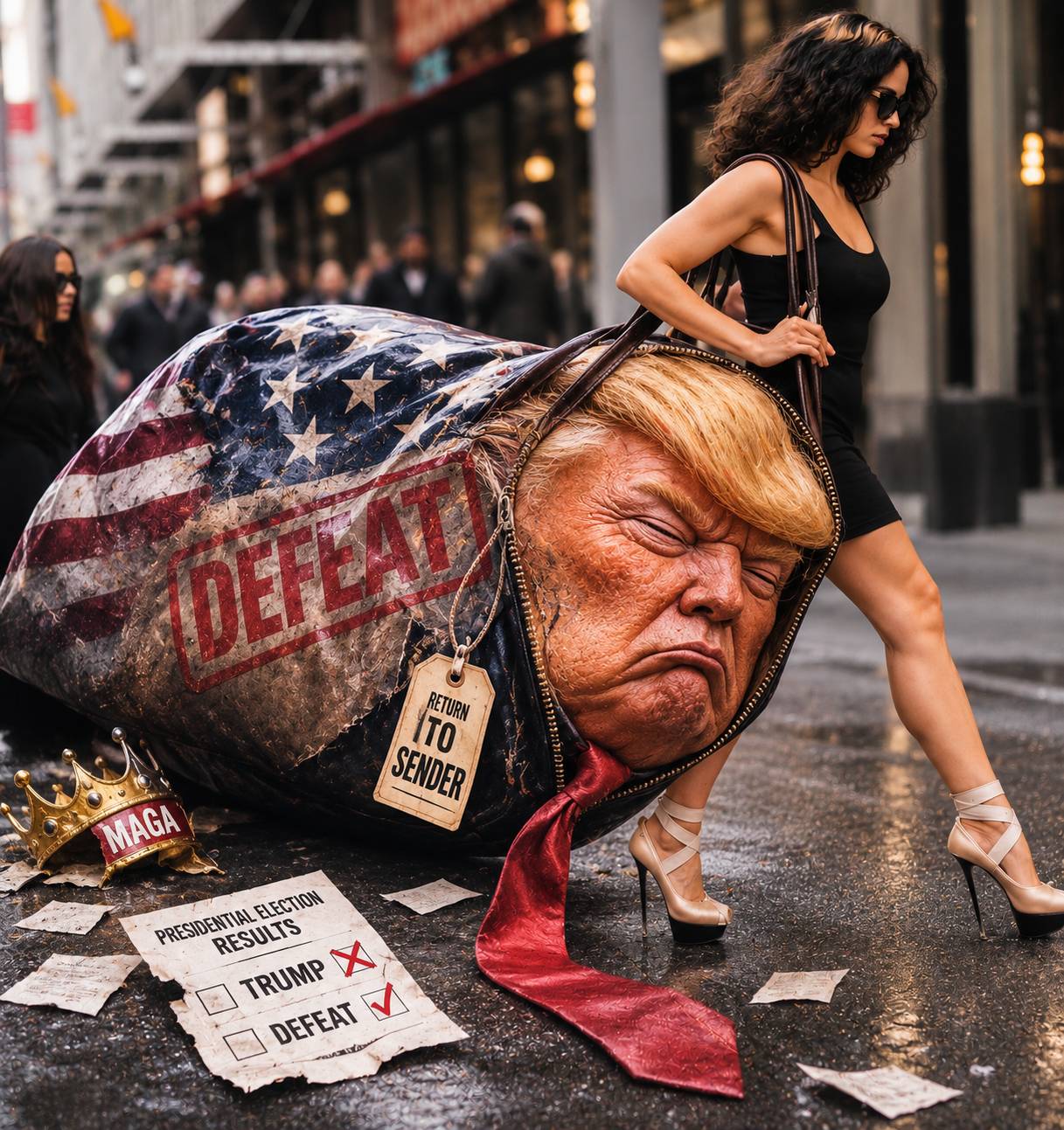
THE HANDBAG HAS GROWN
When creativity runs out of ideas, apparently it starts taking up more space.
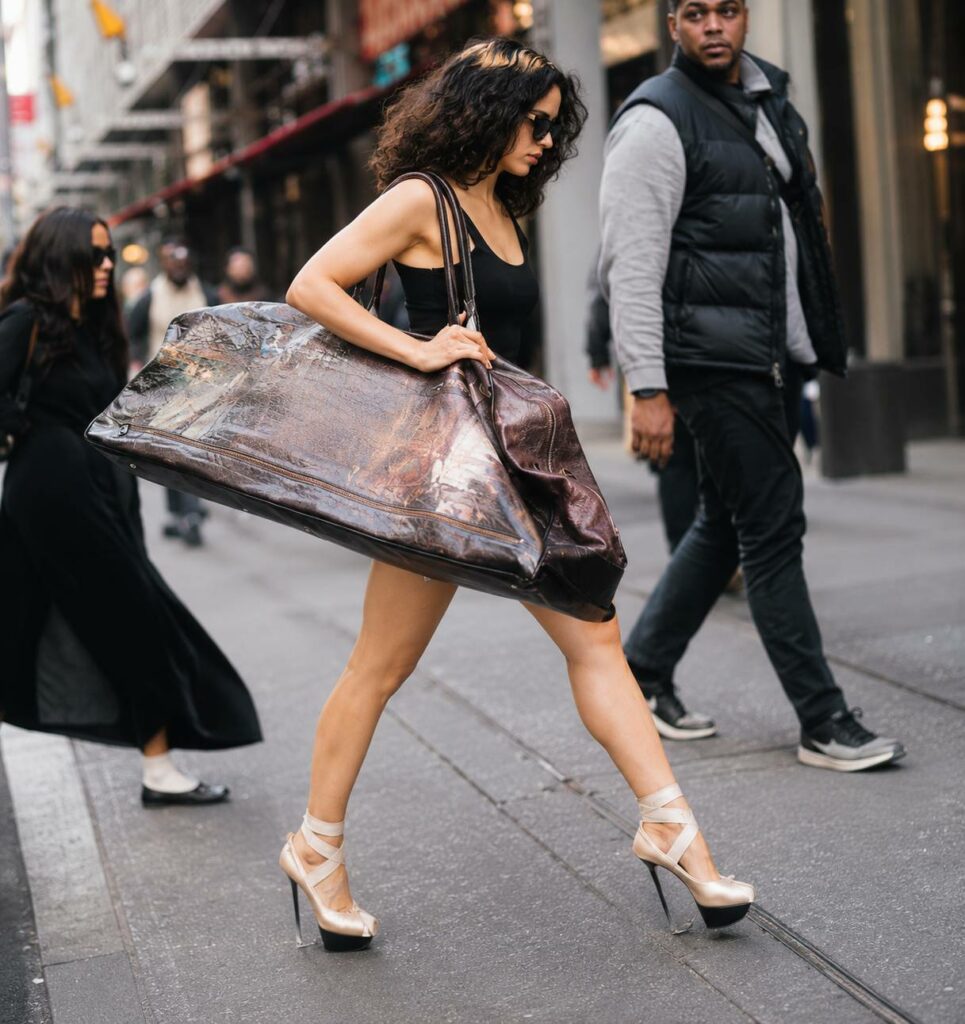
New York, October 28. Rosalía steps out of her hotel carrying what appears to be a piece of furniture that has escaped from an interior design showroom. One metre long, 45 centimetres wide, 65 centimetres high. Officially, it is a handbag. Unofficially, it qualifies as a studio apartment in central Paris, with considerably better finishing. Designed by Dana Toder, this extraordinary object raises a philosophical question worthy of the greatest thinkers: when a handbag becomes larger than its owner, which one is the accessory? The New York Times wondered who was walking whom. A fair question. At this rate, the next fashion trend will require a driving licence, planning permission and perhaps a mortgage.
Naturally, the fashion industry has discovered a new obsession: gigantism disguised as genius. At Tommy Hilfiger, tote bags resemble emergency evacuation equipment. At Carven, weekend bags appear designed for people leaving civilisation permanently. At Julie Kegels, hatboxes have grown large enough to accommodate the entire cast of Alice in Wonderland. One can almost hear the creative meetings: “We have absolutely nothing new to say.” “Excellent! Let’s make it three times bigger.” And so, through the miracle of marketing, a storage problem becomes a creative revolution. The less there is to admire, the more there is to carry.
There was a time when a handbag was an object of elegance, proportion and craftsmanship. It complemented a silhouette rather than threatening to swallow it. Today, it seems destined to transport a microwave, a folding bicycle and the collective ego of the luxury industry. Meanwhile, fashion commentators solemnly analyse these oversized containers as if they were archaeological discoveries revealing the anxieties of modern civilisation. Perhaps they are. After all, in an age of uncertainty, inflation and existential dread, a handbag large enough to live in might be the most practical luxury investment imaginable. At least, unlike certain designer collections, it offers somewhere to hide.
The real tragedy is not that handbags have become enormous. It is that the ideas behind them have become so small. Fashion once challenged conventions through imagination, craftsmanship and beauty. Now, apparently, it challenges the dimensions of doorways. We are invited to applaud the spectacle, admire the audacity and confuse inconvenience with innovation. But making something bigger does not necessarily make it better. Otherwise, a shipping container would be the ultimate masterpiece of haute couture.
And perhaps that is where fashion is heading: towards a glorious future in which handbags need parking spaces, shoes require building permits and creativity is measured by the cubic metre. One thing is certain: when fashion has nothing left to say, it can always make a bigger bag to carry the silence.